Sunday, October 13, 2019

A COLUMBUS DAY THOUGHT FOR THE POLITICALLY INCORRECT

ESSAY NUMBER 12 of " PROTOCOLS " Read the evolving book on line for free:https://americanadmiraltybooks.blogspot.com/2019/07/space-as-ocean-or-protocols-twitter.html

CHAPTER 4 THE PERILS OF FIRST CONTACT
WHY WE DON'T WANT TO REPEAT THE COLOMBIAN EXCHANGE ON A COSMIC SCALE 


LESSONS FROM THE AGE OF EUROPEAN MARINE EXPLORATION FOR THE SPACE AGE.

No matter what propulsion system we may be using at the time, inevitably we will encounter extra terrestrial life. The first time it might be microbes, which in fact might be the most dangerous encounter we will experience. We'll discuss the odds, later but we have to be prepared for the possibility of encountering other civilizations . Again our ocean planet's history can provide some insight on how we should prepare to handle this contingency and how to avoid the mistakes of our past.


WHEN COLUMBUS MET GUACANAGARI  The Perils Of First Contact, A Case Study


 The first landfall of Columbus in the New World is a subject of considerable academic debate. Wherever the landing actually took place, Columbus called the island "San Salvador". For many years historians generally believed this to be an island known as "Wattling Island"in the Bahamas which later was renamed "San Salvador". At least nine other islands have been seriously examined as possibilities. The most often discussed seems to be Samana Cay. There has been debate over the issue for years and strong cases have been made for other islands as the first landfall of Columbus. Some of the most scholarly debate in terms of forensic navigation have been carried in the pages of the Naval Institute PROCEEDINGS and NATIONAL GEOGRAPHIC. However, the where of the first landfall of Columbus is not as important for an examination of the lessons of the first contact.


 The first lesson to be derived from the first voyage of Columbus is the definition of "first contact". Is "first contact" as a matter of gravest concern, the first contact between emissaries of an alien culture and the first inhabitants met? Or is "first contact" the first meeting between the emissaries and the first officials of the culture visited. The first contact between Columbus and native Americans made little impression on the culture of San Salvador, an apparent rural back water  but provided Columbus with some vital intelligence. His next contact with a real Chief of numerous villages Guacanagari would set the course for European /Native American relations for centuries. There is a high probability when exploring unknown areas that actual first contact will be unplanned. Let us examine the first days of Columbus in the New World and ask our selves what there is to learn from the Columbus experience if initial contact in our own explorations will be with non official persons. Let us also look for lessons for that first contact with officials;  what we might learn that would allow us to be better prepared in the event of an encounter with another civilization in outer space.


 Columbus became convinced that he was near land on October 11, 1492. Land birds were seen from his ships and a carved wooden object had been recovered from the sea. However by sundown nothing else had been seen. At 2200 (10 PM) Columbus and crewman Pedro Guttierrez and Rodrigo Sanchez saw a light to the Southwest. The Pinta set course for the light. At 0200 (2 AM) October 12, 1492 crewman Rudrigo de Triana sighted land. Columbus fell to his knees in gratitude to God. To quell a potential mutiny Columbus had agreed to sail westward for only three days more on October 10, 1492. As dawn broke Columbus and his men saw a small green Island. A small boat was  launched and the crew with Columbus embarked pulled for shore. While still offshore Columbus observed a group of people come out of the forest. First contact was about to happen. The people came down to the beach and stood looking at the approaching boat. Columbus dressed in his finest for the occasion buckled on his sword and armor when he saw the people on the beach. The sailors were also armed.


 When the boat landed Columbus and the sailors disembarked. The people from the forest stood a little distance off while Columbus unfurled the Spanish flag and proclaimed himself viceroy of the island he named "San Salvador". The people from the forest continued to stand a little ways off. Gripping , but not brandishing his sword, Columbus approached. The people proved friendly and curious. They accepted a few trinkets with apparent pleasure and ran off. The crew set out exploring the island. The next day the islanders returned in great numbers. Columbus noticed that some of the natives wore ornaments of gold. Communicating mostly through sign language Columbus discovered that the source of the gold was a large island nearby to the south east. Columbus set sail for the south east where he found another island and more friendly inhabitants, some with gold ornaments. Once again Columbus was told the gold producing island was elsewhere.  Again Columbus set sail. Columbus island hopped for two weeks in the Bahamas meeting people on each island and eventually ended up off the coast of the island that we now call Cuba.


 On November 21, 1492 a strong wind separated the PINTA from the SANTA MARIA and the NINA. THE SANTA MARIA and the NINA headed east and arrived off the island of Hispaniola. Here Columbus met the first real native "official" since landing on "San Salvador", a local chief named Guacanagari. Columbus was impressed with Guacanagari who arrived with flourishes and the entourage Columbus thought worthy of a minor Oriental prince; but displayed a friendly , outgoing nature, apparently tempered with great humility. Guacanagari, a chief of the peaceful Tainos in turn was impressed with Columbus. Guacanagari feared the cannibalistic Caribs, Columbus looked like a potentially powerful ally. In turn Columbus would shortly be in need of Guacangari's assistance.


 On Christmas day 1492 the SANTA MARIA fetched aground on a reef. The ship did not sink but could not be re-floated. She was so badly damaged that it was clear that the SANTA MARIA would never return to Spain. Now Columbus really needed Guacanagari. Guacanagari provided men to help offload the  SANTA MARIA" and strip her of useful fittings. The NINA was too small to carry both crews back to Spain. Columbus would have to leave some of the men with Guacanagari.Columbus had grown to trust Guacanagari and Guacanagari had apparently developed a genuine interest in and apparent affection for the Europeans.


 There can be little doubt that the civilized behavior,apparent command of resources, obvious authority, and the gift of a mask made partially of gold by Guacanagari helped convince Columbus that he was on the outskirts of the Orient. It would be to Guacanagari that Columbus would entrust nearly a third of his crew, and to Guacanagari that Columbus would return on his second voyage. The crew must have also been impressed with the Tianos people, Guacanagari, and the climate and terrain of the Bahamas because many crewmen volunteered, even begged to remain. Thirty nine were chosen from an abundance of volunteers. Diego de Arana , the Master at Arms was left in command. With the help of the Tianos the crew built a fort from the remains of the ship and stored it with provisions and weapons. Since the ship wreck had occurred on Christmas Columbus called the fort "la Navidad". After a farewell banquet with Guacanagari Columbus departed for Spain during the first week of the new year 1493.


 Shortly after the start of the return voyage the Nina sighted the Pinta. They would separate again in a storm before reaching Spain. The story of Columbus's return voyage from his first visit to the New World, the rivalry between Columbus and the Captain of the PINTA , the intrigue at court after the return of the NINA and  PINTA could fill a book. But these details detract from the examination of the events surrounding Columbus and Guacanagari. Consequently we will leave the details of the return voyage and organization of the second voyage back to Guacanagari's island to others and cut to the return of Columbus to "La Navidad".


 The sovereigns of Spain authorized a second voyage and issued formal instructions. These formal instructions included a call for the conversion of the natives to Christianity but stipulated that the natives be treated "well and honorably". Communications would be facilitated on this second voyage by the presence of former captive "Indians" who had been baptized, learned Spanish, and could act as interpreters. This second expedition would consist of seventeen vessels and 1,200 to 1500 men. On September 25, 1493 Columbus left the port of Cadiz to great fanfare for a return in force to La Navidad. Before reaching La Navidad Columbus landed on an island he called Guadeloupe. This turned out to be the home island of the free ranging and raiding cannibal Caribs so feared by Guacanagari. No violence ensued because most of the warriors were gone on a raiding party off island. The remaining Caribs, mostly women, old men and a few captives explained this mostly by hand gestures. The Europeans took twelve young women and two boys who had been captives of the Caribs with them as they departed the island.


 After leaving Guadeloupe the fleet sailed along the south coast of Puerto Rico to the north shore of Hispaniola. Columbus looked forward to seeing La Navidad and the progress he hoped had been made there in the interval since his departure. He looked forward to seeing Guacanagari who he was certain would impress his fellow adventurers. But when they anchored off the island, there was no answer to their salute. Indeed there was little sign of life. Shore parties found bodies near the remains of the fort which had been burned. Shore parties found bodies near the remains of the fort which had been burned,the first were badly decomposed and could not be identified. Two however were bearded and surely European,  What would come to be known as America , had lost its first European colony. Guacanagari sent regrets to Columbus by envoy blaming the massacre on the Caribs. Guacanagari claimed that he had tried to defend the Spaniards and was wounded as a result. Columbus and several men went to visit Guacangari but noticed that he bore no scars. Little by little Columbus learned the truth.  The men he left behind had behaved badly, lusting after gold and taking "Indian" women. The Tianos defended and avenged themselves. The first European settlement in the New World came to a bitter end as a bloody massacre. The trust between the Tianos and the Europeans was broken. Though immediate relations between the new landing party and Guacanagari's Tianos were cordial on the surface, storm clouds were gathering.

-------------------------------------------------------------------------------

Saturday, October 12, 2019

HAPPY BIRTH DAY NAVAL INSTITUTE

October 2019:
 The US NAVAL INSTITUTE TURNS 146 YEARS OLD THIS MONTH

Image result for united states naval institute founded atNOTE: The United States Naval Institute, is based in Annapolis, Maryland and located on the grounds of the Naval Academy. It was founded by naval officers in October of 1873 the Institute , is a private, non-profit, professional military association that seeks to offer independent, nonpartisan forums for debate of primarily sea services matters, but also national defense and security issues. 
FoundedOctober 9, 1873
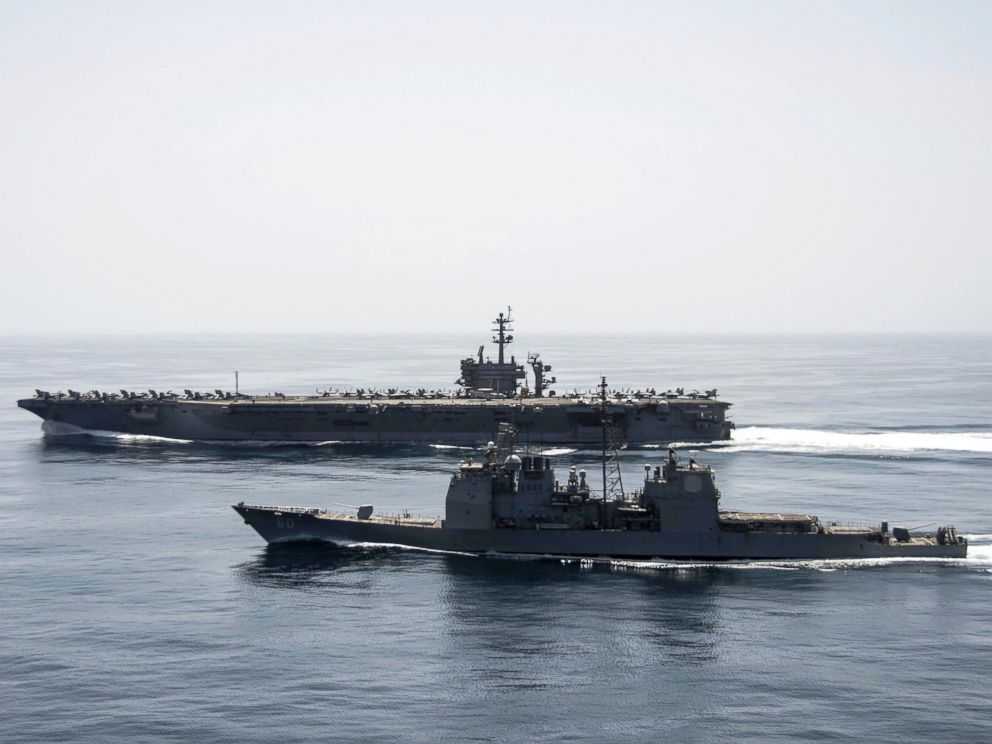
PHOTO: The aircraft carrier USS Theodore Roosevelt (CVN 71) and the guided-missile cruiser USS Normandy (CG 60) operate in the Arabian Sea conducting maritime security operations.
PHOTO :US NAVY

The  Naval Institute's 146th birthday, is this month The Institutes's various on line and print media will be focused on  the future of the Sea Services, with articles examining the use of metameterials, a three-tiered fleet, and the Marine Corps' new focus on China. Infrared, radar, acoustic, and optical stealth are the new frontiers in low-observability aka "Stealth" . The front runner in the metamaterial competition must be the US Navy. The stealthiest fleet will  have an enormous advantage in this era of ship killing missals.  The Navy's current fleet is somewhat  homogeneous and high end. The lesson of the BISMARK is that quantity has a quality all its own. A gang of cheap combatant ships can down even the best war ship. Our surface combatant fleet is not an affordable force structure for the future. A proposed solution to this problem is to go beyond the current high-low framework to a three-tier, high-medium-low fleet.

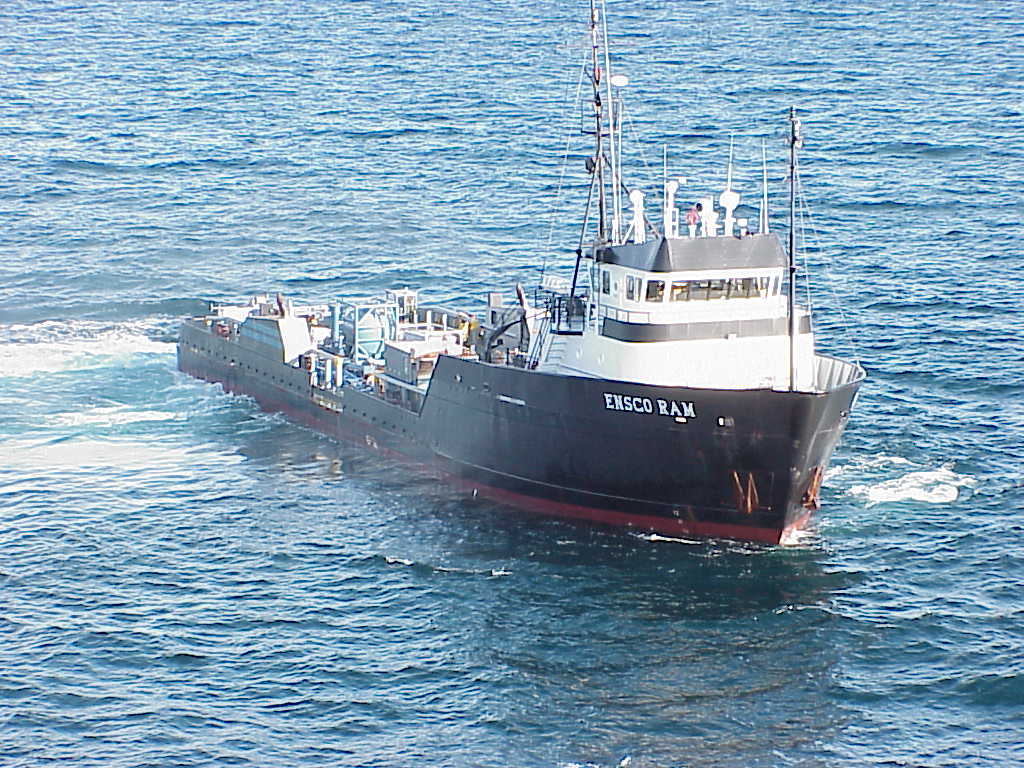
  We have dealt with this issue in the pages of the American Admiralty Books blog before. Our insight that we are not seeing anywhere else in the naval establishment is to include on the low end vessels of high lethality but relatively low range and on scene endurance for strictly constabulary duties. If we have to surge to the Pacific, there are places we can not leave unguarded. Take for example the Mediterranean Sea . Small combatants permanently attached to the sixth fleet and stationed near the the narrow openings from the Atlantic Ocean, Black Sea, or Red Sea home ported at Gibraltar Greece. and Israel could be formed cheaply from commercial off the shelf vessels common to the US off shore oil industry supply vessels. These "Boat Trucks' with their large aft decks and low free board can be readily configured with a variety of weapons packages. Operating in threes, all would have some ship to ship  weaponry, but one could be primarily anti ship, one primarily anti submarine and one primarily anti air. The  basic little ships are presently available at fire sail prices in Louisiana and Texas due to the down turn in the offshore oil industry caused by cheaper on shore tight sands oil coming in from new finds in the Dakotas, Texas and elsewhere. So if we need a name for this type of fleet building we would suggest Constabulary Forces consisting largely of craft of opportunity. Here is what we had to say when we first addressed the subject .

U.S. OFFSHORE SUPPLY VESSEL available in lengths 165' to 295'+

Wikipedia Commons Photo released under  GNU Free Documentation License.

This tiny Russian warship just shocked the world

Russian Buyan class Missile boat LOA 203 ft.

Updated 5/15/2018

Four ships of Russia's Caspian Sea flotilla, all under 1,000 tons and most under 207 feet in length, performed a combat mission normally associated only with the largest of war ships. The four Russian vessels which we may think of as tiny warships or large patrol boats fired 26 SS-N-30A land attack cruise type missiles at rebel forces in western Syria, more than a thousand miles from the landlocked Caspian Sea.

 According to the Russian Ministry of Defense the ships were DagestanGrad SviyazhskVeliky Ustyug, and Uglich. All but the Dagestan are 203 foot missile boats displacing about 950 tons of the Buyan Class. The Dagestan is a 355 foot Gepard -class frigate displacing about 1900 tons.  The missile boats are smaller than some U.S. offshore supply boats. But apparently all are large enough to mount more than one cruise type missile. While the vessels themselves can't exit the Caspian sea obviously the area targeted in Western Syria was within range of their individual missile batteries. Using a long advocated U.S. Navy tactic, the Russians net worked four of their smaller vessels  and loosed a barrage of deadly and destructive missiles accurately at a target over a 1,000 miles away. Russia is the biggest naval power on the Caspian Sea the world's largest landlocked body of water. The Coastlines of the Caspian Sea are shared by  AzerbaijanIranKazakhstanRussia, and Turkmenistan The naval fleets that are there must be mostly built or assembled on the shoreline and once launched are really unavailable for service anywhere else. However, their recent launch of a networked and coordinated 26 missile barrage to a target a thousand miles distant indicates that their military utility extends far beyond the immediate shores of the Caspian. These tiny war ships are actually very effective warships and there in is a lesson for the U.S. Navy. By contrast the smallest U.S. Navy warship to possess an equivalent weapon, the Tomahawk cruise missile is an Arleigh Burke class destroyer which is over 500 feet in length overall and displaces more than 3,000 tons or nearly three times the size of the largest Russian vessel used in this recent networked missile strike. 

 There has been a debate that has been raging in the pages of the NAVAL INSTITUTE'S PROCEEDINGS and other naval trade journals about "quantity verses quality" for decades. Since the end of WWII the U.S. Navy has been putting its' ship building dollars into nuclear propulsion, and globe circling capable big warships with sophisticated weaponry. The United States has global sea lines of communication to protect, and must have global reach. So our fleet has been constructed so that the capital ships of our Atlantic or Pacific fleets can detach as individual vessels or small flotillas and go join U.S. forces offshore of anywhere in the world. The U.S. Navy is the master of under way replenishment at sea. But something always nags at the mind of real naval thinkers as our ships grew larger and more expensive. Its been said many time in the pages of the U.S. Naval Institute's PROCEEDINGS "quantity often has a quality all its' own" . This is after all the great lesson of the BISMARK . In that pivotal battle of WWII a bunch of relatively small and inexpensive British destroyers ganged up on the "Death star" BISMARK  and put an end to her. The Russian use of networked missile fire from vessels thought too small to warrant such weapons illustrates that the ability to gang up on more expensive vessels is not the only virtue of small inexpensive vessels. The quality that small vessels have is definitely related to their quantity whether "ganging up" on superior war ships or net working to take out over the horizon targets.

 The most obvious case in point where the U.S. could take a cue from the Russian Caspian Sea fleet  is our own phantom Sixth Fleet. Once we had a powerful naval fleet in the Mediterranean and we still do at the moment but the ships actually belong to the Atlantic Fleet and could at any moment need to be deployed elsewhere. The so called sixth fleet now actually only owns a command and control ship based in Italy, and an Admiral and staff. Everything else is now borrowed from the Atlantic Fleet which is also expected to send a portion of its standing force for the "pivot to the Pacific". Who would dare venture an opinion that frightful events in the Mediterranean are about to slow down? We need a standing force in the Mediterranean, one that doesn't leave the area. In these tight budget times perhaps our best bet is to go for some low cost quantity vessels with a mix of innovative but cheap high performance weapons. Used offshore supply boats can be bought by the dozen for less than the cost of a single Arleigh Burke destroyer. Their range is not great but we have plenty of secure fuel in Italy and we could have it in Israel , Perhaps President Trump who appears to be a pragmatist will see fit to consider the basic idea. These offshore supply vessels do have a great deal of compartmentalization that can be retained from their typical below deck liquid cargo tanks for drilling mud. This gives them remarkable survive-ability for their size. The little supply vessels come with comfortable accommodations for a two watch navigation and engineering crew, and extra berthing for ordinance rates that a war ship would need. The little ships are basically designed for an unmanned engine room and some commercially sail with a single "Designated Engineer". Converted to small war ships they would only be expected to conduct short patrols south of the Bosphorus  or offshore of Israel unless called upon to mass forces for a strike similar to what the Russians pulled off with their Caspian fleet. 

 Such commercial conversions could be formidably armed with tripod mounted stinger missiles, normally a soldiers shoulder mounted anti aircraft defense weapon , anti armor weapons mounted piggy back atop 50 cal machine guns as the Coast Guard 82 footers did in Vietnam, and that big roomy aft deck could accommodate land attack missiles or ASW weapons. The crews could live in Greece or Israel, and use commercial facilities, all coordinated by the existing Admiral and staff in Italy. While the shell game will continue with the sixth fleet borrowing from the Atlantic fleet ; there will be a big disincentive to redeploy the Sixth Fleet's small warship heart, they simply don't have the range to be globe trotters , this is an inexpensive center piece of a constabulary force. Over time the commercial conversions can be replaced with purpose designed, and purpose built state of the art small war ships, but costs count. If you go small in size you need a low unit cost because you fail to achieve the quality that is an integral part of quantity, if your quantity is small. 

For Additional Reading:
U.S.Naval Institute: Digital Membership Info: 

If you have serious questions about ISM obligations and compliance contact our resident ISM expert via E-mail or phone
File:Supertanker AbQaiq.jpg


William H. Toohey III AFNI
Toohey Marine LLC
Master Unlimited
ISO 9001:2015 Lead Auditor Class
(Bureau Veritas)
ISM Lead Auditor (ABS Certified)
IMCA CMID Vessel Inspector
Vessel Compliance/Training/Safety Officer
Cell: 504-432-1958
Email: skiffrunner@gmail.com
SEE: https://americanadmiraltybooks.blogspot.com/2019/07/our-senior-legal-correspondent-with.html
for a growing number of informative posts on the ISM (International Safety Management Code)
--------------------------------------------------------------------

Thursday, October 3, 2019


Report to Congress on the Annual Long-Range Plan for Construction of Naval Vessels for Fiscal Year 2019 Prepared by: Office of the Chief of Naval Operations Deputy Chief of Naval Operations (Warfare Systems) (N9) 2000 Navy Pentagon Washington, DC 20350-2000

Image result for Public domain or official Navy images of ship building
U.S. NAVY PHOTOGRAPH 1942


Click here to link to the full text of the report:
Read below for the basic themes of the report and a table of contents.

Key Themes in this Report The National Defense Strategy provides the overarching guidance and high level requirements for establishing the Navy the Nation Needs (NNN), the Navy’s plan for building and sustaining a lethal, resilient force through balanced investments across readiness, capability, and capacity. This 30-year shipbuilding plan is the foundation for growing capacity with the following key themes:  Acts on the policy legislation provided by Congress in the 2018 NDAA, which supports Navy’s validated NNN requirement for 355 Battle Force ships.  Includes 54 Battle Force ships within the FYDP (11 more than PB2018 request), and all candidate Service Life Extensions (SLE).  Anticipates achieving a 355 ship Battle Force beyond 2050, but also frames options for potentially accelerating to the 2030s with additional resources, service life extensions, and strong industry response.  Provides scalable acquisition profiles that promote a stable and efficient industrial base that encourages industry investment in capital improvements, capital expansion, and a properly sized world-class workforce.


Image result for Public domain or official Navy images of ship building
THE USS GERALD FORD IN DRY DOCK US NAVY PHOTO (PD) 


Annual Long-Range Plan for Construction of Naval Vessels for Fiscal Year 2019 Table of Contents I. 
Reporting Requirement ..............................................................................................3 II. Submission of the Report ...........................................................................................3 III. Key Themes in this Report ........................................................................................3 IV. Force Structure Assessment and Fleet Architecture ..................................................3 V. Unmanned Systems ....................................................................................................4 VI. Long-Range Plan .......................................................................................................4 VII. Industrial Base ...........................................................................................................6 VIII. Summary ...................................................................................................................
.6 Appendix 1: Difference between the 2014 Force Structure Assessment and the 2016 Navy the Nation Needs Appendix 2:
 PB19 Shipbuilding Plan (FY2019-FY2023) ..................................................9 Appendix 3: Long-Range Naval Vessel Inventory ...........................................................11 Appendix 4: Shipbuilding Industrial Base & the Boom/Bust Impact ..............................16 Appendix 5: Estimated Annual Ship Construction Funding Required for .......................19 the Long-Range Shipbuilding Program Appendix 6: Planned Ship Decommissionings, Dismantlings, and Disposals .................20 during FY2019-FY2023 Appendix 7: Auxiliary Vessel Plan ..................................................................................22 Appendix 8: Estimated Total Cost of Construction for Each Vessel ...............................24 Contained in the Annual Long Range Plan for Construction of Naval Vessels for Fiscal Year 2018 (Limited Distribution)

Should any of the short links deteriorate over time try this URL for the entire report
https://www.secnav.navy.mil/fmc/fmb/Documents/19pres/LONGRANGE_SHIP_PLAN.pdf#targetText=Construction%20of%20Naval%20Vessels%20for%20Fiscal%20Year%202019&targetText=The%20estimated%20cost%20of%20this,and%20%24153%2C000%20in%20DoD%20labor.

If you have serious questions about ISM obligations and compliance contact our resident ISM expert via E-mail or phone
File:Supertanker AbQaiq.jpg


William H. Toohey III AFNI
Toohey Marine LLC
Master Unlimited
ISO 9001:2015 Lead Auditor Class
(Bureau Veritas)
ISM Lead Auditor (ABS Certified)
IMCA CMID Vessel Inspector
Vessel Compliance/Training/Safety Officer
Cell: 504-432-1958
Email: skiffrunner@gmail.com
SEE: https://americanadmiraltybooks.blogspot.com/2019/07/our-senior-legal-correspondent-with.html
for a growing number of informative posts on the ISM (International Safety Management Code)
--------------------------------------------------------------------


Tuesday, October 1, 2019

THE DRAGON IN THE SOUTH CHINA SEA AND OUTER SPACE

A PROTOCOLS ESSAY:

THE GREAT CATFISH EXPLAINS THE DRAGON'S INTENTIONS IN SPACE AND HOW THEY PARALLEL RECENT AND LONG AGO MARITIME HISTORY


THE GREAT NAMAZU AAB'S STAR POLITICAL ANALYST
GREETINGS BIPEDS:
 As we all now know there is a race to the moon, the US and some allies vs the Chinese . If the Chinese get there first and establish a working base we expect that they will behave no better in the commons of space than they have behaved at sea, which has been despicable. While US bipeds walked numerous times on the moon and even left junked cars behind they claimed to have gone there "for all mankind". 
   
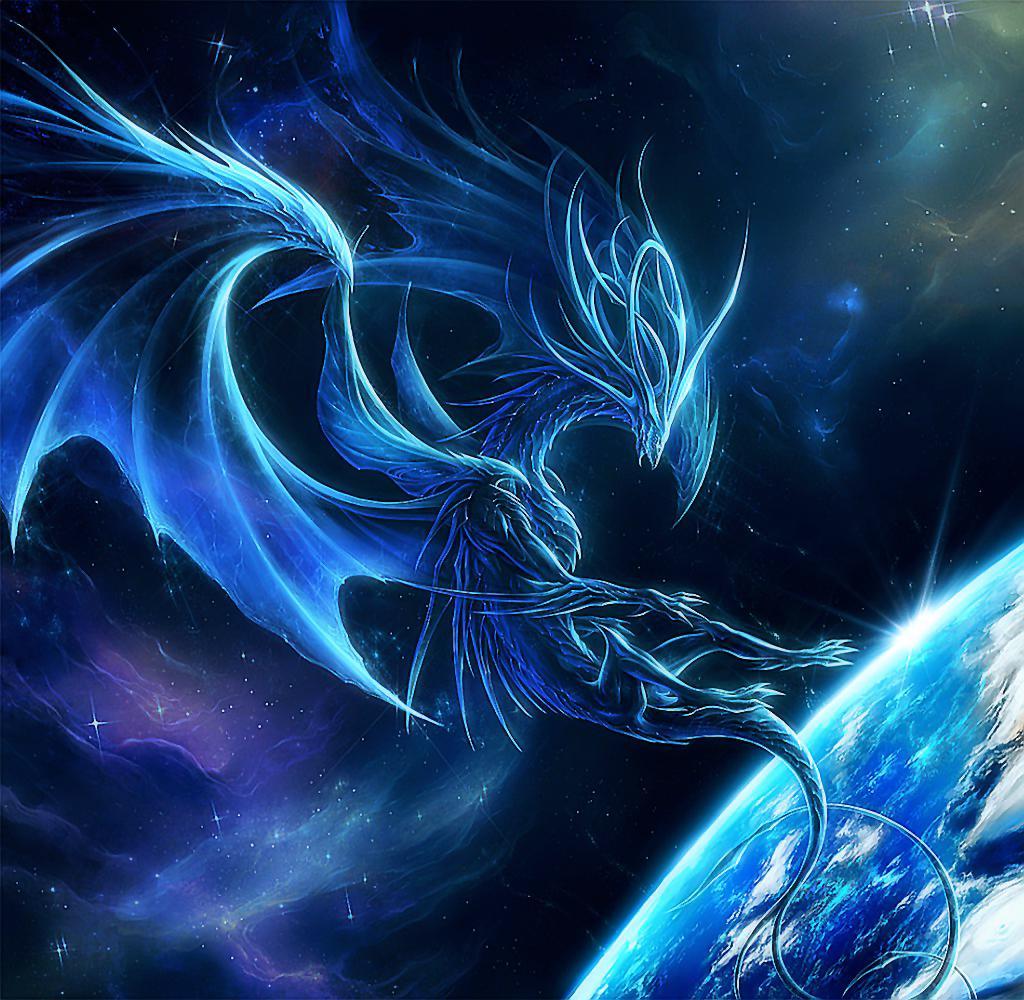
Space Dragon                                          Sea Dragon
 That's not likely in the case of the Middle Kingdom Dragon Space Force. If we look at the history of the Dragon in the commons of the South China Sea and elsewhere we should expect them to make territorial claims. We should also expect the Dragon to pointedly ignore prior US space actions that could have nuisances of territorial claims. The United States took the high road over 50 years ago and declared the solar system a commons and eschewed any territorial claims. What is going on now in space is a repeat of the dispute between the Catholic European seafaring states and the English and Dutch . Simultaneously. the Europeans were exploring the planet by sea, making claims to lands already occupied by other civilizations, and disputing the status of the seas 
themselves as a commons. and on an off making war on each other. The European Recognizance  was a very busy time.
ENTER THE POPE
File:Pope Alexander Vi.jpg
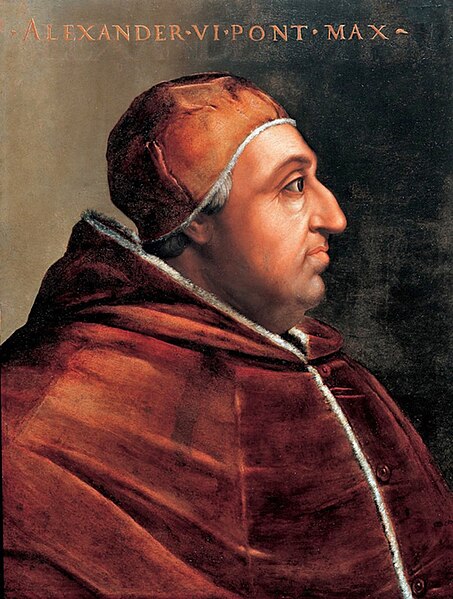
Pope Alexander VI Leading Proponent of the "Mar  clausum ( Closed Sea) 
 In 1494 two years after the first voyage of Columbus Pope Alexander VI published a "Papal Bull" creating an imaginary dividing line of the world on a north south axis. In his Papal Bull Pope Alexander VI used this dividing line to divide the world between Spain and Portugal. The Pope in his bull, 'Inter caetera" decreed that all lands west and south of a meridian line 100 leagues west of the Azores and Cape Verde islands rightfully belonged to Spain. The rest of the world went to Portugal.  This set off a debate in international law between two schools of legal thought. The papal theory has come to be known as the Mare Clausum which is legal Latin for "closed sea". Today the term is used in international law to describe a sea or arm of the sea  under the jurisdiction of a state and not accessible to others without specific permission of the state in possession.. In modern usage until challenged by the Dragon most bays were considered part of the inland or insular waters of the surrounding or adjacent state., while larger bodies of water bordered by multiple states were considered the "high seas" or "Mare Liberum" ( free sea ).. The China seas, north and east are bordered by many states such as the Philippines and their neighbors. The Dragon's "nine dash line" representing their claim of sovereignty over these international seas at one point runs almost to the mean low water mark for certain Philippine beaches. The dragon bases its claim on ancient writings and charts. So far when tested by the International court ( on a complaint by the Philippines ) such evidence has been rejected soundly as being a basis for redrawing territorial waters and exclusive economic zones created by international convention and neighboring states treaties within the bounds of the convention. Expect this rejection to be cited when the Chinese try to enforce their first territorial grab on the moon or mars. Our landing on the moon 

We suggest the below publication available to read free on line, link below , as a 72 page primer on the international law of the sea:  https://americanadmiraltybooks.blogspot.com/p/authoritative-literature.html
--------------------------------------------------------------------------------------------------------------------
  THE ENDURING PRINCIPLES OF MARITIME INTERNATIONAL LAW

File:Berner Iustitia.jpgFile:USCG Eagle.jpg

----------------------------------------------------------------------------------------------fifty years ago will mean nothing to the Chinese. Our landing of a half century ago will hold no more court precedent than their historical arguments about the 9 dash line. We made no territorial claim and instead declared  the solar system a commons of all mankind.The  Mare Clausum (closed sea)  is an exception to today's international law  where the mare liberum (free seas) is the norm. The mare liberum is enshrined in both traditional international law and in codified international law through a number of "conventions" ( treaties agreed to by multiple states),. Today the concept of the mare liberum means that the sea outside the jurisdiction of a state is open for  navigation to ships of all nations.  

 This is the generally accepted principal on what we call the "High Seas", but 

it has become subject to modification in recent decades. The discovery of offshore oil 
and the  necessity to effectively manage certain fisheries led to first, an expansion of the Territorial Sea from 3 miles off shore to 12 miles, then the recognition of exclusive economic zones (EEZ). The exclusive economic zone does not confer on the recipient ownership but rather an exclusive license to do certain things within this area of the "commons" such as establish oil wells. Within the EEZ the EEZ holding  state with the EEZ privilege must  exercise management of all benthic (bottom contacting) fisheries and manage in accordance with relevant international convention certain migratory fish populations when they pass through the EEZ waters., Managing an EEZ is not, nor was it meant to be an exclusive right to do anything the EEZ nation wants, or to limit access  except in the cases of dredges, or mobile offshore drilling vessels type craft. The water surface and water column are in the international commons and are open to navigation. The only restriction that the EEZ state may put on foreign shipping is the requirement to use certain safety fairways that the EEZ state is obligated to establish and maintain between their oil drilling operations, wind farms, aquaculture operations etc.... 

 China has a large EEZ by existing law. Their existing EEZ is up to 200 miles seaward from their shore line. They have a legitimate exclusive claim to certain of the resources, and obligations of good stewardship over a bit less than half the area they now claim but were rebuffed in international court. They are now trying to enforce by astute and limited naval force the sovereign rights they claim over other peoples EEZs and in the case of the Philippines almost to their western beaches. SEE: Congressional Research Service Report On The Chinese Navy  https://americanadmiraltybooks.blogspot.com/2019/09/congressional-research-service-report.html
  Chinese sailors at Pearl Harbor, the place their government has publicly announced that they would drive us back to. (Official U.S. Navy Photo)


ENTER THE POPE , AGAIN 
File:Pope Alexander Vi.jpg
Pope Alexander VI Leading Proponent of the "Mar  clausum ( Closed Sea) 


Now when the pope divided the world and its oceans into the private preserves  of Spain and Portugal the battle over the Protestant Reformation was in progress. Some of the Great Powers of Europe had left the Catholic fold. The most powerful of these "Protestant  nations " ( yea  I know they call themselves "Anglican Catholic " ) was Great Britain a sea   dependent nation with lots of sailing fire power and no tolerance for being told what they   could do or where they could go on the world's oceans. The Pope had of course divided the "New World into two Providences to be run by two reliably Catholic powerful states. The rest of Europe was offended while Britannia  and the Netherlands were about to spend big time on ocean exploration and colonization they also began to prepare for war. The Catholic powers felt the pope was the last word on International Law. Indeed his papal bulls are  still cited today  ( Eximiae devotionis (3 May 1493), Inter caetera (4 May 1493) and Dudum Siquidem (23 September 1493) when argument arise over the legitimate mare Clausum. There are legitimate closed seas but in most cases these are wide bays surrounded on three sides by a single nation, and these were mostly established some time prior to 1494. The Chinese claim to the South China Sea goes way back beyond 1494 to a time when certain Chinese emperors actually had effective control over the area. Many of those old imperial occupied or vassal states became independent nations centuries ago and as such based on modern conventions are entitled to a 12 mile territorial limit and an EEZ of up to 200 miles from their beach. Where the potential EEZ meets a neighbor's propose EEZ line the Convention requires the two coastal states to work out an agreed boundary in good faith. No one else on the particular arm of the sea may dictate EEZ boundaries . So China is pretty much denied a believable role as a disinterested third party for brokering boundary disputes. Everyone in the nations bordering the China Seas knows that if China is given the referee's seat at the bargaining table some how the dragon will walk away with major concessions towards recognition of its 9 dash line claim. So, blocked from its claim by international law , courts, and public sentiment the dragon is making an end run.

 The dragon's strategy, is the Cabbage Patch approach and the effective control or settlement legal argument. Under the cabbage patch stratagem China picks out reefs and other partially submerged land forms in the contested sea and at great expense raises these areas above sea level. Sometimes they build structures and declare these artificial islands "light houses", or "fishing stations" They then call in their "naval militia " consisting of armed commercial fishermen, These artificial islands, and often natural reefs as well, are quickly surrounded by many armed Chinese fishing boats. Recently they have carried this activity into the EEZ of neighboring states. Once enough Chinese fishermen are present, and the former owners pretty well locked out, the Chinese Coast Guard  shows  up to "protect their fishermen". The Chinese formed the world's largest coast guard virtually over night by combining disparate marine law enforcement agencies into a coherent para-naval force with civilian law enforcement powers.. Their coast guard ships are not imposingly large and are lightly armed consistent with most formal coast guards found around the world. The dragon's position is that everything going on as their neighbor state struggles to regain control of their lost areas is a law enforcement matter being handled by the Chinese coast guard and not a naval invasion of anyone's territory.. The worst of all lies is the half truth. It is true that an EEZ is not the territorial possession of the state granted the EEZ. So techno-legally the Chinese action isn't a territorial invasion. This gives a lot of Western states , even those like the United states pause when thinking about punishing China for their maritime land grab. If you have a free standing, vigorous  and permanent anti war segment in your population ,as the United States does,  they are sure to buy into the half truth  and mobilize resistance against any effective punitive action, The dragon will get lots of media coverage for its convoluted side of the argument. The cabbage patch strategy can be defeated without war but it takes some out of the box naval thinking. For an example see:
HELIOS RUEHLS, INC NAVAL STRATEGY WHITE PAPER: CHINA SEAS
THE CHINESE CABBAGE PATCH STRATEGY:
A STUDY IN THE USE OF EMERGING AND DISRUPTIVE TECHNOLOGY IN COUNTERING A NAVAL LAND GRAB.  .. . https://americanadmiraltybooks.blogspot.com/2017/05/helios-ruehls-inc-naval-strategy-white.html 

    
Image by US Navy: this or that .>if you know how to deploy it.            Image :by Artist image of an advanced elevating work boat                                                                                                                                   
                                                                                       design from BENNETT OFFSHORE  http://www.bennettoffshore.com/3500.html

Going back to developments in the maritime sphere between 1492 and about 1776 the European sea powers attempted to out maneuver each other and for sometimes prolonged periods shoot at each other. All of this pain over the argument between the Mare Clausum  and the Mare Liberum. It would take nearly 400 years of English sailors applying pressure and often dying in the process for the Mare Liberum to become the accepted international law. As late as the 1790s and early 1800s the Islamic states of the Mediterranean still didn't conform; remember the Barbary Pirates? Then a young United States stepped forward and enforced the rule. The Mare Liberum is a gift of centuries of English speaking sailors sacrifice. Today it is codified in many ways into international law by wide adoption into the national law of many nations and by wide agreement of multiple nations on international conventions including one called " The law of the Sea Convention" the Dragon would like to scrap this hard won logical and  necessary law for a free pass to loot and pillage their neighbors so long as it takes place off the beach,  

 The companion legal argument to the cabbage patch strategy is a double edged sword consisting of two well known concepts in international law. In assigning sovereignty over previously unknown territories international law recognizes two basis for such assignment effective settlement and effective control. The Chinese are starting to maintain human populations on some of their artificial islands claiming effective settlement. And the Dragon claims that all their coast guard activity amounts to "effective control" . The Dragon's navy also gets into the act by meeting transiting commercial vessels and sometimes even transiting war ships and announcing over the radio a welcome to the South China Sea and notice that the dragon's navy will be providing an escort through "their territory.". Even in the case where ships have tried to avoid this "escort service " the Dragon simply slips into a parallel course at an easy distance off. They have as much right to do that as the transiting ship has the right of peaceful passage and the right to refuse this bogus "escort service".., But the escort "service" even when a sham of just a parallel course always has the potential to develop some useful radio contacts and or photo opportunities that the Dragon can use in an international court at some time in the future.  

 So this is how they have acted in the oceanic commons. Why would we expect any better behavior in space? look for the Dragon to attack the global consensus that our solar system is a commons  like the oceans where no state should be barred from operating. The Chinese will muddy the waters of space exploration and settlement with strident nationalistic and over reaching territorial claims. They re determined not to be a good neighbor in space but rather what they are in their own neighborhood a prowling acquisitive Dragon. If they ever are first to land on any planet in our solar system look for them to claim the entire planet as part of their sovereign territory . The Dragon is going to be trouble in space!
I am NAMAZU and I approved this messaged