Wednesday, February 5, 2020

HELIOS RUEHLS MARINE DIVISION PRESENTS THE ISM

INTRODUCTION TO THE ISM CODE FOR LAWYERS: 
INITIAL CLASS MEETING HAND OUT
(C) 2019 by Helisos Ruehls , Inc.
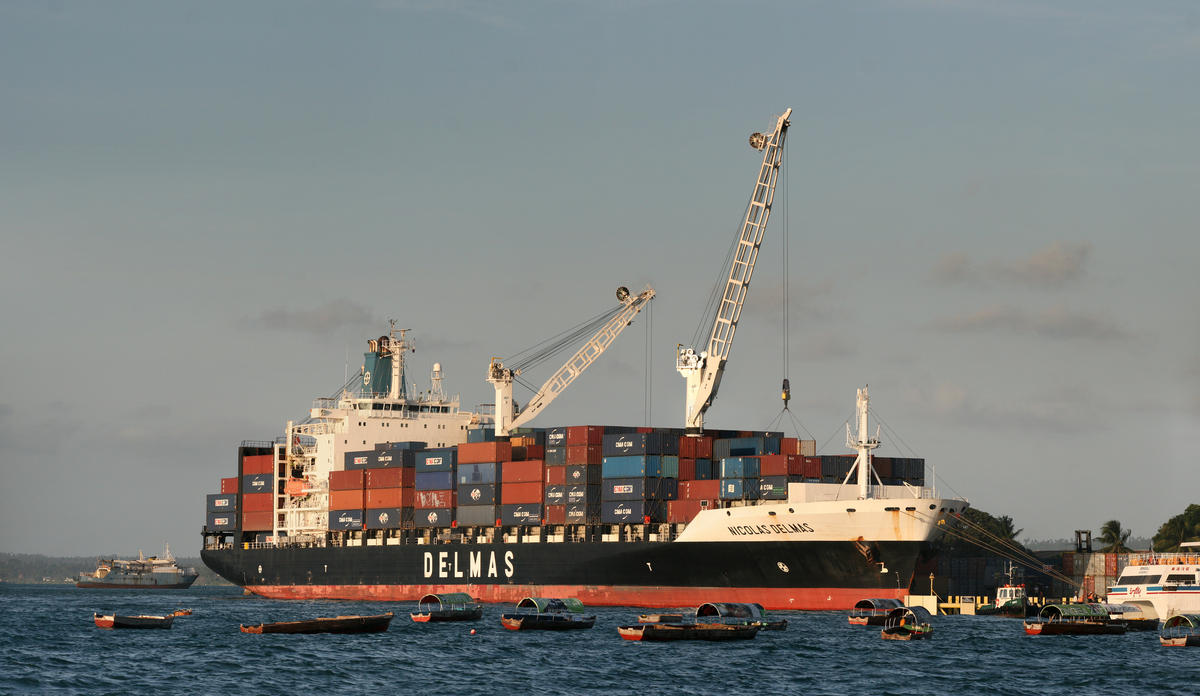
PHOTO CREDIT MUHAMMAD MAHDI KARIM VIA WIKIMEDIA COMMONS
Image PD Clipper ship

The following was originally prepared as a class hand out for a formal CLE class offered by Helios Ruehls Marine Division

THE PRESENT LEGAL REGIMES FOR LIMITATION OF LIABILITY, AND CORPORATE LIABILITY, AND CULPABILITY WHICH CRYSTALLIZED IN THE 19 CENTURY ARE FOREVER CHANGED BY THE ADOPTION OF THE INTERNATIONAL SAFETY MANAGEMENT CODE (ISM).
Before the ISM was adopted by international convention marine accident investigators and other forensic experts involved in modern shipping were introducing changes in the findings of causation into global admiralty courts. No longer believing in "proximate cause" alone as a basis for determining post accident liabilities or culpability testifying navigational experts began to explain the "Causation matrix". Under the old system ship owners were allowed to limit their liability in the wake of an accident to usually the value of the hull post accident (often nothing); and it was almost unheard of for a shore based owner or manager to be charged criminally in the wake of an accident.ISM imposes a new general duty on everyone from deckhand to CEO, or owner. That new collective duty is to 'develop a corporate culture of safety. While anyone in the causation matrix may be charged under the code; the code is very clear that this culture of safety begins at the top of the corporate organization. The code also provides the legally trained reader with many useful details in how to establish this 
Culture of Safety in such a way that it can withstand administrative / regulatory scrutiny. A serious "good faith" effort at adhering to the Code may not bring about a classic limitation of liability but it should keep corporate officers out of jail and reduce fines. Limitation of the old style is still technically possible, but ever increasing unlikely. Every maritime personal injury lawyer;every maritime insurance defense lawyer , and certainly every maritime corporate counsel should set about becoming an expert in the ISM Code. Indeed the Code's management / inspection system creates a position of auditors, some are corporate employees, others are Classification societies , at at least one must be neither an employee of the shipping company nor connected to the relevant classification society. We think this position would best be filled by an admiralty lawyer well versed in the `ISM Code and related US law. Such an arrangement provides the ship owner and managers with prevent advice that may prevent trouble. The participating lawyer receives the opportunity to present his services as more than a litigator, but as a 
counselor. 

WHAT IS THE ISM CODE?
The "ISM" Code refers to the "International Safety Management Code" promulgated by the International Maritime Organization (IMO) of the United Nations. It is a detailed code of safety management that describes how vessel owners, operators and management are to "establish a culture of safety" in ship operations.
DOES THE ISM CODE HAVE THE FORCE OF LAW IN THE UNITED STATES?
Yes, internationally it is an outgrowth of the Safety of Life at Sea (SOLAS) Convention, a
multilateral maritime safety treaty that the United States is signatory to. This convention was amended starting in the late 1990s and continuing into 2017, and anticipated to be periodically amended beyond, to provide for a code that the current and anticipated future ICM Codes model. By our last count in addition to the United States 63 other seafaring nations representing approximately 99% of the world's shipping by tonnage are signatory to the convention and are actively engaged in enforcement of the code. By virtue of the US
Constitution, such international treaties as the U.S. is signatory to are part of the "law of the land". In addition, the U.S. has adopted most elements of the treaty into statutory law and detailed regulation. The U.S. adopts most of the "code" by Federal Statute at 46 USC 32013205 and detailed Coast Guard enforced regulations may be found in 33 CFR Part 96 Subpart D. The U.S. Coast Guard is the "Responsible Administration" as suggested in the Code. However, the USCG relies mostly on its "Trusted Agent" the American Bureau of Shipping (ABS) for the day to day administration of the Code including issuance of the various "documents of compliance" and the routine performance of certain of the required "third party audits" of the ship owner's resulting Safety Management Program.
NOTE: It may be useful at times to be able to cite to the elaborate history of the Code's development much as it is occasionally desirable to bring into pleadings and memorandums in support, the legislative history of a statute or the evolutionary process of detailed regulations. The vocabulary and citation system of the IMO and its related Marine Safety Committee (MSC) are different from, but bears some similarity to the American system of legal citation. A few noteworthy points follow:
  1. Adoptions by the IMO Assembly are a bit like the enabling statutes in U.S. admiralty law that direct the U.S. Coast Guard (USCG) to promulgate detailed safety related regulations. The sub body that the IMO Assembly usually addresses is their own MARINE SAFETY COMMITTEE (MSC). The MSC generally does the work of generating technically detailed codes. The IMO Assembly sometime also addresses national governments and their maritime safety administrations or agencies in a general way advocating state action in pursuit of compliance with IMO/ MSC generated safety codes. Adoptions by the IMO Assembly are cited by the letter "A" followed by a numeric part and section identifier. An example of an Assembly citation would be "A.596 (15)" which called on the MSC to develop guidelines for shipboard and shore based management to ensure safe operation of RoRo ferries. Marine Safety Committee "resolutions" are often reflected in resulting nation state detailed regulations verbatim. An example of an MSC Resolution citation would be MSC. 353 (92) which describes amendments entered into force for the Code on 1 January 2018.
  2. THE ISM CODE is codified "International law" and has been adopted into statute and regulation by most of the 63 nations signatory to the SOLAS Convention.
OBSERVABLE RESULTS OF THE WIDE SPREAD INTERNATIONAL ADOPTION OF THE CODE:
  1. While not a lot of case law and related precedent has emerged yet,(Feb.3,2020) There is an observable trend towards the Code being an instrument for defeating actions in limitation of liability. The requirement of the Code for ship owning /operating companies to create a "culture of safety" has a natural inhibiting effect on the ability of management and owners to claim that an accident was due to actions or conditions "beyond the "probity and knowledge" of the owner.
  2. There is a growing trend in the U.S. and internationally to hold various levels of management individually civilly liable and / or criminally culpable for a growing number of accidents.
IS THERE A CONCISE GUIDE TO THE ISM CODE AVAILABLE IN PRINT?
"THE ISM CODE, International safety Management Code With Guidelines For
Implementation (last edition at this writing 2018) ,
IMO Publication Sales Number: ID117E
ISBN Number (978-92-801-1696-0
This is an 84-page complete guide including citations and many direct quotes from the code meant as a hand book for all those involved in the Code compliance effort. REMEMBER THAT THE CODE FOR MANAGEMENT DOES NOT CONTAIN MUCH IN THE WAY OF EQUIPMENT RELATED TECHNICAL DATA. THE REQUIRED SYSTEM IS A MANAGEMENT SYSTEM SUBJECT TO FREQUENT PERIODIC PERFORMANCE AUDITING.
LAWYERS HAVE A ROLE TO PLAY IN THE DEVELOPMENT OF EACH CORPORATE CODE AND SUBSEQUENT PERFORMANCE AUDIT PROGRAMS. THE CODE MUST
BE DESIGNED WITH "DUE DiLLlGENCE" IN MIND. SHOULD DUE DILLIGENCE BE FOUND WANTING SUBSEQUENT TO AN ACCIDENT; PROVING A GOOD FAITH
EFFORT MAY BE THE DEFENSE THAT REDUCES JUDGEMENT AMOUNTS OR
CRIMINAL PENALTIES IMPOSED. 02019 Inc

OBSERVATION: Both the ISM Code and U.S. detailed regulations require periodic corporate internal and third party ISM program performance audits. The ABS offers services for most of these but THE ABS is the compliance document issuing authority. The convention provides at article 2.3:
"Any organization performing verification of compliance with provisions of the ISM Code should ensure that the personnel providing consulting services and those involved in the certification procedure are independent of one another. " [See MSC. 208 (81)].
Admiralty lawyers aren't quite in a compliance market for their services relative to the code but they can cite to the above section in soliciting counseling roles at both the original design of the corporate Code compliance system and during the continuing auditing processes. THE CODE IS ABOUT  "DUE DILIGENCE" and that is the only thing that will keep corporate income intact and managers out of prison in the wake of serious, especially death dealing accidents. In the event that due diligence is found wanting in a particular instance A GOOD FAITH EFFORT appears to have an effect in reducing the severity of consequences for managers.
HELIOS RUEHLS. INC. MOST URGENTLY SUGGESTS TO ALL SHIPPING COMPANY EXECUTIVES AND MANAGEMENT TO BRING SKILLED ADMIRALTY LAWYERS FAMILIAR WITH THE CODE INTO THE EARLY PLANNING STAGES AS COUNSELORS AND TO CONTINUE TO BRING THEM INTO THE CORPORATE INTERNAL AUDITING PROCESSES AT LEAST ANNUALLY.

AT PRESENT THE ISM APPLIES UNDER AMERICAN LAW AND REGULATION DIRECTLY TO LARGE SEAGOING AMERICAN FLAG SHIPS. HOWEVER THE "SUB CHAPTER M" NEW REGULATIONS FOR THE AMERICAN TOWING INDUSTRY INCLUDING INLAND OPERATIONS REFLECTS THE KEY CONCEPTS THAT WE ITALICIZED  IN THE TEXT. MORE OVER WE ARE STARTING TO SEE SUCH LANGUAGE  APPEARING IN DISTRICT COURT DECISIONS. REWRITING OF REGULATIONS AND COURT PRECEDENT ARE EXPECTED TO DRIVE THE CONCEPT OF A CORPORATE CULTURE OF SAFETY ACROSS TH ENTIRE AMERICAN SHIPPING INDUSTRY INCLUDING EVENTUALLY THE DOMESTIC TOWING AND OFF SHORE SERVICE VESSEL 

THE INTERNATIONAL SAFETY MANAGEMENT CODE FOR LAWYERS
LESSON PLAN 1 : INTRODUCTION
OBJECTIVES:
  1. To impart to the student, an understanding of the relationship of the
International Safety Management Code (ISM Code) to the International Maritime Organization (IMO) of the United Nations (UN).
  1. To introduce the student to the common acronyms and abbreviations used in describing the ISM Code.
  2. To impart to the student, the legal status of the ISM Code both as codified International Law and as related U.S. federal law and regulation.
  3. To introduce the student to the US and international structure of the administration of the of the code.
  4. To impart to the student a basic understanding of the institutional evolution (similar to a legislative history) of the ISM Code within the IMO and its transition into U.S. law and regulation.
  5. To provide to the student key elements of citation to the code, and the relevant U.S. law and regulation.
  6. To identify to the student, the key secondary source that all lawyers advising shipping companies in the application of the Code should have on hand and be familiar with.
  7. To describe to the student, the role of the lawyer as legal counsel to corporate officials attempting to design, implement, or audit performance of their corporate ISM Code Program.
If you have serious questions about ISM obligations and compliance contact our resident ISM expert via E-mail or phone
File:Supertanker AbQaiq.jpg


William H. Toohey III AFNI
Toohey Marine LLC
Master Unlimited
ISO 9001:2015 Lead Auditor Class
(Bureau Veritas)
ISM Lead Auditor (ABS Certified)
IMCA CMID Vessel Inspector
Vessel Compliance/Training/Safety Officer
Cell: 504-432-1958
Email: skiffrunner@gmail.com
SEE:https://americanadmiraltybooks.blogspot.com/2019/07/our-senior-legal-correspondent-with.html
for a growing number of informative posts on the ISM (International Safety Management Code)
--------------------------------------------------------------------

Sunday, February 2, 2020

SOME NEW NAVAL SUPPLY VESSELS WILL BE RE-DESIGNATED "WAR SHIPS" FOR THE SEA BASING MISSION

US Navy 020919-N-3653A-001 MSC USNS Supply steams in the Med.jpg
PHOTO: USN
Tactically and strategically This is a smart move but beyond the immediate this is a  kicking the can down the road on certain manning issues as well as the utilization and coordination between certain elements of the U.S Merchant Marine  and the US Navy.

U.S. Navy "Sea Base "Ships were intended as naval supply
vessels with a capability to stay on scene in support of littoral and on shore operations.  It was originally intended to designate them  them Military Sea lift Command vessels manned for the most  part  by  Navy CIVMARS (Civilian Mariners  akaMerchant Marine personnel) but now the Navy announces that the ships  will be designated "War Ships",commanded by commissioned naval officers and manned by enlisted Navy Crews.

This designation will impart to the ships and their officers the  duties, and privileges of "war ships (such as being treated as "Sovereign Territory" able to provide asylum (in coordination with the State Department), and the commissioned officers aboard  may provide notary and other consular functions. . The designation allows for greater  armament and more  uniform rules of engagement in any theater of operations. By manning the vessels with naval crews vice the "CIVMARS" the Navy temporarily and partially resolves one of itstwo major retention issues at the moment .


 The Navy has two major retention issues right now. First the Navy can not recruit and retain enough "CIVMARS" (Merchant Mariners) to adequately man its supply vessel fleet. This has led to "carrying over" individual crewmen in rather large numbers for additional voyages that they did not expect or sign up for. Too many "CIVMARS" have had to resign civil service in order to get off the ships. Some come back but the gap in service negatively affects their civil service benefits especially retirement computations. The second major retention problem the Navy is having is growing release from active duty of Third and Second class petty officers in the ship operational rates, exactly the people they are turning to to solve the  CIVMAR shortage. What is driving these uniformed maritime professionals out of the active duty Navy is the deployment schedules for too many war ships. So to keep the supply chain running the Navy proposes to substitute the CIVMARS they can't retain with naval officers and petty officers  they can't retain. 

 Simultaneous with this personnel movement the Navy is trying to re-channel as many exiting naval operating personnel as possible to the MSC ships as new "CIVMARS" (Merchant Mariners). Given the operating schedules or lack there of in the MSC  it is doubtful that the Navy will be able to retain their newly departed petty officers for very long as Merchant Mariners of any sort. This why the Navy should look into the cross over of "Jones Act Merchant Mariners" to  blue water operations for career enhancement purposes, particularly lateral mobility ( as in your are an Able Seaman or offshore oil industry mate and you see a job posted that you know you can do as an able seaman or third mate but the officer licensing and mariner credentialing  system run by the Coast Guard makes it difficult to cross over). To facilitate the cross over of exiting Naval operational petty officers to the MSC the Coast Guard and the Navy have entered into examination , licensing, and documentation fee waivers for exiting Navy officers and petty officers and other measures that facilitate the cross over from Navy to Merchant Mariner.

 More needs to be done to facilitate Jones Act mariners that want to cross over and in WWII it was done. More needs to be done to educate both the Navy brass and the exiting Navy professionals about the entire U.S. Merchant Marine including its largest, and most economically robust segment the ,Jones act trades. If you want to keep a former naval mariner in the Merchant Marine you can't have his or her first voyage be their worst. Navy rates about to exit should get an orientation to the entirety of the Merchant Marine, and understanding of the differences between the various trades and fleets and the officer and ratings credentialing system. Most important all new entrants to the Merchant Marine must come to understand the nature of the peace time Merchant Marine as a job market. Rank is not permanent and the market at any given moment reflects different compensation for different credentialed and non credentialed skill levels. For example all members should have an Unlimited Able Seaman's card with bridge team endorsement . This allows cross over between blue, green, and brown water trades at a skilled level. 

 In the Gulf of Mexico offshore oil industry support trades there is a need for "Barge Masters"  for a variety of non self propelled barges such as the "lay barges" that build subsurface pipe lines. Because of the non self propelled nature of these large vessels often the only Credential that the Coast Guard demands for the master and mate positions is the unlimited AB. However the compensation for these AB/"Company designated "Masters" is far better than some positions legally requiring an actual master's license. For example the large day excursion boat and inland over night cruise vessels offer very pleasant work environments and some great rotational schedules as well. Needless to say there is plenty of interest in these jobs by licensed officers at some point in their careers. Consequently because Merchant Marine Service in peace time is a job market, the law of supply and demand affects compensation , the inland and near coastal American Flag passenger trades do not compete with grimy industrial lay barges on compensation. The lay barges on the other hand can not fill their master and mates billets with just any old unlimited AB. The owners of lay barges need AB/ acting masters with strong supervisory experience and serious knowledge about rigging. Senior boatswains mates with the right AB "ticket"and just a little industry experience seem a perfect fit. The lesson in this comparison is that every merchant mariner  needs a resume as well as   
merchant mariners credential. 

The highest pay doesn't always go the highest officer license. A Merchant Mariner can make a very substantial income on an AB's certificate and the right types of non-credentialed experiences and training. That's what the resume is for. The impermanence of officer status is sometimes hard for exiting naval commissioned officers to understand. In the Merchant Marine you get credentials to participate in a very special job market, you don't get a "position in life" or for life. This is what exiting naval bridge team and black gang members of all ranks have to realize and accept. 

 Now of course the Navy had other reasons besides the shortage of "CIVMARS" for this move and we mentioned some of them in our lead up to the our discussion of the Navy / MSC personnel shortage. The Navy needs "sea bases", high endurance , high cargo capacity vessels that aren't hauling the beans and bullets from shore to the theater of operations but storing and distributing supplies safely offshore from the usual hostilities. Such vessels will be subject to attack if the enemy has any blue water capability . These Sea Base ships will also need shuttle craft capable of hauling large lots of cargo and large pieces of equipment. The "Bo Trucks" or offshore supply vessels of the OCS ( Outer Continental Shelf) Jones Act trades would be a perfect fit. It is time for naval planners and policy makers to learn what the U.S Merchant Marine really is and work with it to enhance our national sea power.  We will probably post more on these subjects as they have struck a raw nerve at a time when certain members of Congress are actually considering eliminating the "Jones Act", which would destroy not an ancillary feature of the U.S> Merchant Marine but the root , the heart, and the core of this "industry" that in the past has been militarized and placed at the disposal of the Chief of Naval Operations almost over night. 

Friday, January 24, 2020

ANOTHER PATH TO THE BIG LINKS LOCkER


THE BIG LINKS LOCKER:


UNLOCKING THE MARITIME WORLD: Our mission is literally to  unlock the maritime world by making all English language maritime data easy to find,  available, evaluated when possible, and affordable. We suggest checking our subject pages to your right first, by clicking on the subject section most like your particular interest. These pages will bring you to short introductions,  free links, free videos, book reviews and book lists on the subjects. If that doesn't answer your question come back here and click any of the "super links" below that appear most appropriate, the broadest and most general is hyper linked just below. This is an entire web site of nothing but links to maritime websites and blogs of every description.


"The Mother of All Maritime Links": 


If you don't find the book you need among those we have reviewed so far or linked to click into the Amazon general search engine via the link below or as provided within our special interest sections which you reach by clicking on their titles listed to your right.

GENERAL MARITIME BOOK SEARCH :

We think the following links to major sites aligned with our "Special Interest Pages" can often provide answers to commonly asked questions:

ADMIRALTY or MARITIME LAW:


Note: The Cornell site when you arrive in the Admiralty section has two tabs : "Overview" and "Resources". If you are doing legal research the "Resources" tab is a fast route into most relevant statutes, and regulations, Supreme Court Cases, and even some state cases.

GENERAL MARITIME NEWS
WORLD MARITIME NEWS:

MARITIME TV: Videos and television broadcasts on all manner of maritime subjects http://www.maritimetv.com/


NAVAL HISTORY:

Naval History Blog, Joint Effort of the U.S. Naval Institute and the Naval history and heritage Command.


NAVAL NEWS:

A NAVAL NEWS CLIPPING SERVICE: NOSI Naval Open Source Intelligence:


OCEANOGRAPHY: The Scripts Institute

SHIP RESEARCH: 

SHIPINDEX.ORG

Find publications that mention a particular ship recently or deep into recorded history:  http://www.shipindex.org/  limited free service very reasonable short and long term subscriptions.

BOATING AND WATER SAFETY:
Mario Vittone "Be Safe": http://mariovittone.com/

If you have serious questions about the International Safety Management Code (ISM) contact our resident ISM expert via E-mail or phone

File:Supertanker AbQaiq.jpg
William H. Toohey III AFNI
Toohey Marine LLC
Master Unlimited
ISO 9001:2015 Lead Auditor Class
(Bureau Veritas)
ISM Lead Auditor (ABS Certified)
IMCA CMID Vessel Inspector
Vessel Compliance/Training/Safety Officer
Cell: 504-432-1958


-------------------------------------------------------------

Monday, January 20, 2020

SEALIFT STILL LAGS / MARAD RESERVE FLEET TEETERING


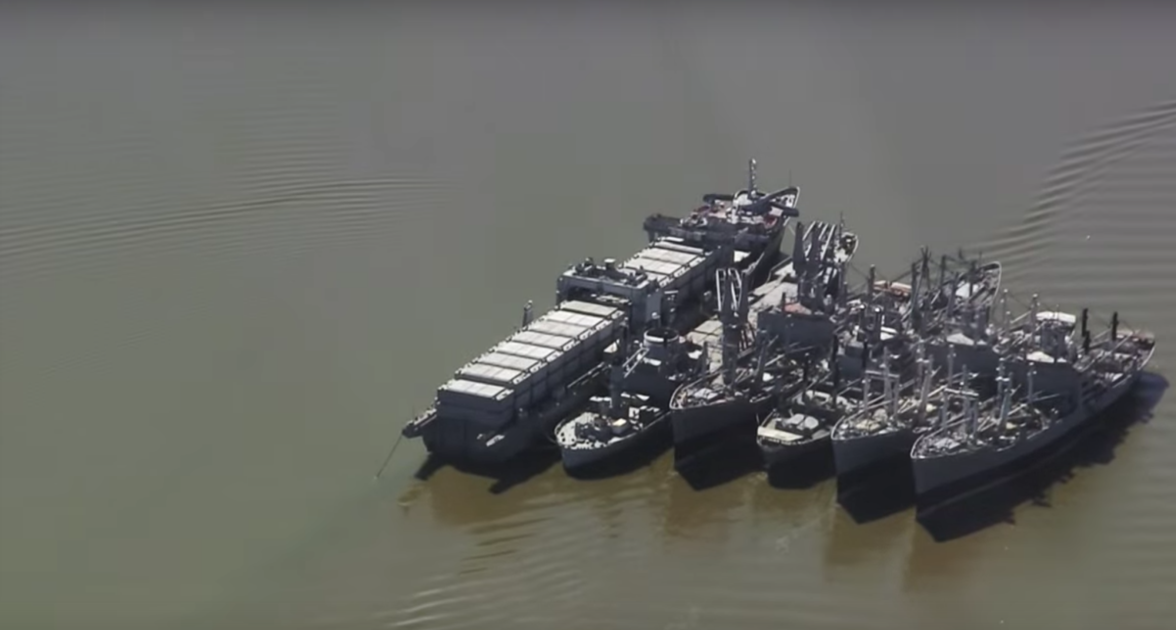
National Defense Reserve Fleet Suisun Bay, Calif. in 2014. US Navy photo and illustration from the USNI report on the same subject
According to reports by the US Naval Institute and others a recent test of the Maritime Administration's "Ready Reserve Force" found it not so ready mechanically and physically, as well as too small in terms of numbers of ships, and woefully short of manpower. .The recent results of a sail on short notice exercise  revealed that only about 40% of the already too small fleet was actually able to sail. The exercise was called "Turbo Activation " , and occurred in September of 2019. Some sources indicate that the exercise involved 28 ships from the Military Sealift Command and the Maritime Administration's (MARAD) reserve fleets on the Pacific, Atlantic and Gulf Coasts. "Turbo Activation "  was the first exercise of this magnitude since 2003. This latest test of activation of our available to the navy auxiliary and supply chain fleet revealed continuing short falls in our readiness to carry out sea lift requirements in even a small regional conflict. In our opinion this means our sea lift capacity is woefully inadequate for a near peer contest. 
image description
MARAD PHOTO: NATIONAL DEFENSE RESERVE VESSELS  Prior to "Operation Turbo" the Maritime Administration was not harboring any great illusions about the readiness of the reserve fleet. MARAD never claimed an estimate of reserve ship readiness over 60 percent. The results of Operation Turbo indicate that real readiness is down to about 40 percent. A large percentage of the decrease in readiness is related to the sheer age of the reserve ships. Typical ships in the MARAD reserve are 30 years old. That's a long time just for the service life of the hulls; when we get into the electro / mechanical systems we are talking obsolescence . The crews have aged too. Many of these reserve ships have steam systems which have not been utilized in ships since just a few years after the existing reserves ships were new builds. Marine engineering officers ate rarely tested on steam systems today. After 30 years most of the maritime labor force that knew how to operate steam machinery died or retired. There is no existing merchant marine training pipeline for steam engineers. Even if we could find the engine room crews, there are few if any spare parts for these ships. Unfortunately in times when honorable discharges are as scarce as hens teeth among the members of the House and Senate increasing any military or naval budget get short treatment. The Navy has a difficult time squeezing enough funding to build about half of the actual combatants that we actually need. "Auxiliaries", "supply vessels" and their like don't have the sex appeal of air craft carriers or nuclear submarines. Most of  our existing  legislators at best, could care less about such matters and a growing number are actually hostile to adequate defense and border control. Many in the Navy are unwilling to compromise on big combatant construction budgets. But the Marine Corps and the Army are both subject to the potential of finding themselves stranded on some distant shore with totally nadequate supply lines. Does the health of our Merchant Marine concern anyone out there? Marines and soldiers if tey think about it. Does Congress care? No. Does the President care, yes, but he does not have the power of the purse and faces unreasonable opposition to defense and border security from DEMOCRATS CONTROLLING THE HOUSE.
SEE ALSO:

MARAD recycles old ships into academy funding @ MARINE LOG 


Tuesday, January 14, 2020

IS BLUE GAS THE "TELSA KILLER" CLAIMED BY SOME STOCK ADVISORS?

WILL BLUE GAS REPLACE ELECTRIC VEHICLES

A Helios Ruehls,Inc. Report


NASA IMAGE

Right now we notice that several syndicated stock market "advisers "are "all in" for "Blue Gas", some calling it the "Telsa Killer" some are predicting up to 1000% gains in share prices and huge dividends in the near term. Supposedly "Blue Gas" technology"will drive electric automobiles off the market long before electric vehicles have achieved their anticipated market share. Helios Ruehls, Inc. is "Net worked skunk works". We maintain a net work of researchers and academics who may be stock owners in our corporation but are not employees, As we seek research assignments and grants in the usual manner of a "skunk works" we are not supporting a lab or staff during our "dry spells". When we need a lab one or more of our "Fellows " provide us with access to their labs in the two universities that we have dealt with so far. With virtually no fixed overhead what do we do with the corporate funds between grants and paid research assignments? We invest it in our "endowment fund". This is a stock market based fund that we maintain and grow to help provide for an eventual expanded fixed over head when revenues are slow. We are constantly watching the realm of high tech common stocks for bargains. Our philosophy in investing in high tech stocks is quite different from those of most well known market analysts. So with all the hype over "Blue Gas" we aren't jumping in  because it doesn't meet our institutional investment criteria. We don't give stock market trading advice we only explain our investment philosophy on different technologies. If you have the time and expertise to "time the market" our decisions tend to run opposite yours. Our "endowment fund" is doing just fine without the big ups and downs of the market. Of course if you are a"day trader" dependent on buying low and selling high, our philosophy won't work for you. Many ordinary people out there have tried the time the market approach but find they can't devote the necessary time to it and all too often miss out on the gains and take a fast slide to the bottom. Some ordinary people may be more comfortable with our investment philosophy though it is institutional in nature. Here we share that philosophy and apply it to the emerging "Blue Gas" technologies. Our investment philosophy in a nut shell.

1. We don't want to hold for ten minutes any stock that we'd be uncomfortable holding for ten years.

2, We do buy some stocks in very well researched companies with real staying power and potential for growth in stock prices but little or no dividends. Our intention is to buy low and sell high but OVER THE YEARS. 

3. When we do have profit from the sale of one of our rising common stock prices companies we invest that money in reliable high dividend stocks. Where possible those dividends go toward buying more stock. But we trying to raise revenues to pay for fixed overhead so eventually we will take those dividends when needed to cover fixed overhead when research assignments and grants (sales) are low. 

4. When acquiring any stock (expected rising common share prices or dividends) we look at the corporate fundamentals and history. Even a very new company may have good fundamentals in terms of product or service, protected place in the market, sound financial management . etc..  We buy and hold, on a long term but not forever. We stay away from stocks that require daily or weekly attention to make a profit from. 

 SO HOW DO WE APPLY THIS INVESTMENT PHILOSOPHY TO THE BLUE GAS INDUSTRY? 

FIRST WHAT "BLUE GAS" IS AND ISN'T: 

"Blue Gas is simply uncarburated water gas burning with a non luminous flame. It is in use already mostly as a synthesis gas and source of hydrogen.

DON'T GET CONFUSED:
"Blue Gas" is completely different from the older "Blau Gas" named after its inventor Hermann Blau of Germany. No longer in widespread use it was an illuminating gas created by decomposing mineral oils which by a heating and compressing process created Naptha.
File:Hermann Blauf.jpg
 Chemist Hermann Blau, inventor of the so called "Blaugas".(PD) 

TODAY'S "BLUE GAS":

"Today's "Blue Gas"is part of the long anticipated "Hydrogen Engine Revolution". It sometimes generates media hype as "fuel from water". There is also a lot of hype generated for "Blue Gas" as a hydrogen generator. The great hope is that since this fuel is made from two of the most common elements on earth (water and hydrogen) that it will be dirt cheap when it comes to powering vehicles. This may eventually be so, but right now and into the foreseeable near future there are technological, distribution and manufacturing costs issues to be resolved. However the first Blue Gas distribution companies are appearing , as are the first vehicles to be powered by this new fuel. Most of these vehicles are in commercial fleets serving metropolitan areas similar to the vehicles using propane and other novel fuels. These vehicles are not on the highway as they are dependent on a fuel source that they can only get at the home base supplier, restricting long distance travel.

 By contrast the electric vehicles that some stock analysts expect the blue gas vehicles to run out of the market can find electricity anywhere and the existing fuel and service centers around the nation and world are gearing up for them with metered out lets, a minor modification of existing service centers since all have electricity already. We believe that the improvements in automotive electrical propulsion technologies including the hybrids ( gas and electrical propulsion) are about to take off and will have many years of market success. These vehicles have proven reliability and economy of operations and the ability to get fuel within the existing automotive infrastructure. Consider that the Hydrogen Council believes that there will be about 5,000 hydrogen filling stations globally by 2030. By comparison there are about 150,000 conventional filling stations in the United States alone able to service with little or no new investment, gasoline, diesel, and electric vehicles. Will "Blue Gas vehicles" eventually become dominant? Maybe but they are at least 10 years away from a real start into the mass market. NA based on 5,000 refueling stations globally it appears to us that the market in 10 years will include some well planned commercial truck routes but even then Blue Gas vehicles will not enjoy the freedom of the Interstates or be very useful except for servicing cargo "Hub facilities". The  final delivery to the door of the consignee will still be by engines in common usage today.
Vector clip art of red truck on the road It will be another 10 years before "Blue Gas"long haul vehicles will be in use and then only on special routes. 

 What of the promise of "Cheap Fuel"? No matter how inexpensive the raw materials (water and hydrogen), no one can sell any fuel for less than the costs of production and distribution. Those costs are emerging but far from fully known at the moment.  So hydrogen is the most abundant element in the universe. That's a fact. Moreover  the hydrogen fuel cell reaction product is water. Finally it is a fact that  there is an ongoing effort to overcome the technical, operational and economic difficulties of hydrogen propulsion.  Helios Ruehls Inc. thinks it is more than 10 years before it is any more than a growing list of alternatives to oil driven and nuclear power it’s not going to happen overnight. Still, some stocks are now showing some progress. Ballard Power Systems (BLDP is up from about $3 to about $8 over the past year) Plug Power (PLUG ,is  up from about $1.30 to about $3.20 over the same period).

 These are not the 1,000% gains that some stock analysts are predicting.If any such phenomena appears we think it will be a result of hype and will be very short lasting. Day traders can afford to watch  such an investment like a hawk and sell just before the crash. Money made on timing a hype driven stock price is just as real as a value driven price rise, but the value driven price rise is here to stay long term. Fail to hit the mark just right with the hype driven stock and you could lose your "investment" which we see as closer to a bet than an investment, but then of course there are professional gamblers who make a good livings placing bets. We can make no recommendations but believe that some emerging companies like Ballard and Plug exhibit the kind of growth that is realistic,and  some survivability over time. These things could be a sign of good fundamentals within these but their recent rise in stock prices could also be influenced by the current hype surrounding "Blue Gas". If you care to research this market you will find a list of companies making or distributing "Blue Gas" or equipment associated with its production and distribution at Wikipedia: https://en.wikipedia.org/wiki/List_of_fuel_cell_manufacturers.

 Again we are not stock market analysts but we do analyze stocks at least weekly for inclusion in our endowment fund portfolio. Our investment philosophy is very conservative. Probably too conservative for most people. But it works for us and may work for those of you who want to stay away from "day trading". We firmly believe that any investment portfolio should contain some stocks. We also believe that the stock market must be approached like a casino. When you enter the gambling casino there seems to be no limit of random number generator games like the slot machines. Your chances of beating these random number generator games are about the same as being struck by lightening in your living room. However Black Jack can be a money maker for the skilled , its also a random number generator but within a limited range that once you understand how to play the averages you are more likely to win than to lose, though if you are noticed winning too often you will find yourself banned from the casino. The great casino that is the stock market will never ban you for consistently winning. But you must develop skills to play the stock game. Look for the fundamentals. Our view of "Blue Gas" is that most of the companies haven't quite been in the game long enough to really judge their management fundamentals, and the product while extremely promising will not be the overnight "Telsa Killing", technological revolution that the present hype is propelled by. Now would be a good time to buy "Blue Gas" stocks if you could predict which companies will still be around 10 years from now. Some potential winners are emerging, but we don't perceive them clearly yet.  


Friday, January 10, 2020

WILL WE SEE THE DRAGON WHEN HE EMERGES FROM HIS DEN? THE PROSPECTS ARE NOT GOOD RIGHT NOW


PD

Over the last twenty years China has transformed its military from a local limited force into a true expeditionary force, able to project power anywhere in the World.  The Dragon does not fear conflict with the United States and her allies per se. The dragon does fear protracted combat with the Eagle and her allies. 

 In the China Seas where the Dragon is attempting to create a Chinese lake out of the exclusive economic zones and in some cases parts of the territorial sea of their neighbors; there are many opportunities for short clear armed contests. In the China Seas we find a number of strategic maritime choke holds.  In this region of strategic maritime choke holds, the Chinese Navy and Coast Guard  have the over whelming armed vessel numbers. The dragon's forces are up for fights that are “short, intense, and decisive.” If the Dragon can hold the choke points they expect to control the China Seas. 


 The Dragon hopes to keep the conflict local and naval in character. They are not ready for a declared all out war with the Eagle and a swarm of their angry neighbors. So the dragon proceeds on many fronts. One is "law fare" the constant argument that what they are doing in seizing reefs and tiny islands far from the limits of their own territorial seas, or exclusive economic zones is lawful under international law. The Dragon didn't show up to defend itself in the World Court when the Philippines filed suite. The Chinese are well aware of the provisions of the UN's Law of the Sea Convention which they signed and which prohibits the type of activities they are carrying out to wrest away maritime territories of their neighbors, The dragon position , though they didn't show to defend it, was solidly rejected by the Court in favor of the Philippines whose claims and complaint reflected present codified international law that China had formally accepted. File:PLAN sailors.jpg
Photo Credit USN
 The Dragon goes back to the law fare drawing board. Two of the strongest arguments for territorial sovereignty under international law are "effective settlement" and "effective administration". The dragon is attempting to develop hard evidence of one or more of these legal arguments over the areas they would most like to seize.
Where they can they are building light houses and other aids to navigation structures (unmanned, may be considered evidence of "effective administration") and actually populating "fishing stations" on some of the areas suitable for building storm resistant structures (evidence of "effective settlement"). Unfortunately for the Dragon neither argument will hold water against the codified and formally adopted UN Convention on the Law of the Sea. Signatory or compliant nations are not obligated to settle or construct something on all of the small islands or reefs within their Exclusive Economic Zones (EEZ). The EEZ is theirs by international multilateral treaty ("Convention") without any requirement for specific actions for continuing to hold small islands and reefs, especially before it is economical to build on or otherwise physically mark or protect such offshore features. The at sea structures and extensive patrol and "escort services" of the Dragon's navy and coast guard are not economically sensible at this time. But there may be oil near these features and they want to improve their future claims. 


MONITORING AND DETERRING THE DANGER:
The United States must  be ready for continued conflict of all types and all fronts up to and including a war with the Dragon where their goal is to push the Eagle back to Pearl Harbor. The key to maintaining serious advantage over the Dragon; better law fare, public relations (diplomatic surge); and   intelligence, surveillance, reconnaissance, and targeting, commonly referred to in naval circles as as ISRT, 


Photo Credit USN
 In all of these areas we have been deficient except for convincing China's affected neighbors that the Dragon means them harm. Many of China's neighbors have armed and expanded their navies and coast guards and sought formal alliances with their neighboring affected states and / or the United States. One could say we won the initial battle for hearts and minds in the region despite ourselves. On the rest of the battle front, intelligence, surveillance , reconnaissance, and targeting (ISTR)  the United State is not performing well . These areas are conventionally military or naval in character and thus dependent on Congress for funding. They are under funded today with no quick fix on the immediate event horizon..

The U.S. REGIONAL DEFENSIVE STRATEGY
 The 2018 National Defense Strategy still in effect relies heavily on one particular strategy and related tactics. That strategy  is to move U.S. naval forces deployment from one of deterrence to to deterrence by denial of use of strategic points. The tactics include plans which require our naval forces to "compete more effectively below the level of armed conflict" (a duty the US Navy should share with the US State Department on a coordinated basis). If armed conflict should occur the US Navy must be prepared to fight and win in actions designed to delay, degrade enemy forces, or deny enemy aggression. Denial and deterrence both require that our forces be sufficiently lethal to keep the Dragon from wanting to engage, The people of the United States prefer real deterrence and view it as real "peace keeping". Unfortunately the Congress of the United States doesn't seem to understand the concept of naval or military deterrence. ISTR is under funded as are the ship building programs that would give us the lethal forces needed in the Pacific without having to abandon strategic positions elsewhere around the globe. A little well timed trouble from the Bear and we will discover that shifting a sufficient portion of the Atlantic fleet to the Pacific is not a winning option.

The decision to change our naval posture by the Trump Administration was necessary and astute. Unfortunately it is a "poor man's strategy". The Trump strategy is all about doing more with less, a fact of life given the present congress. The real solution is an expanded naval budget for a fleet and crews of at least 360 combatant ships and serious funding for ISTR in the China Seas region.